
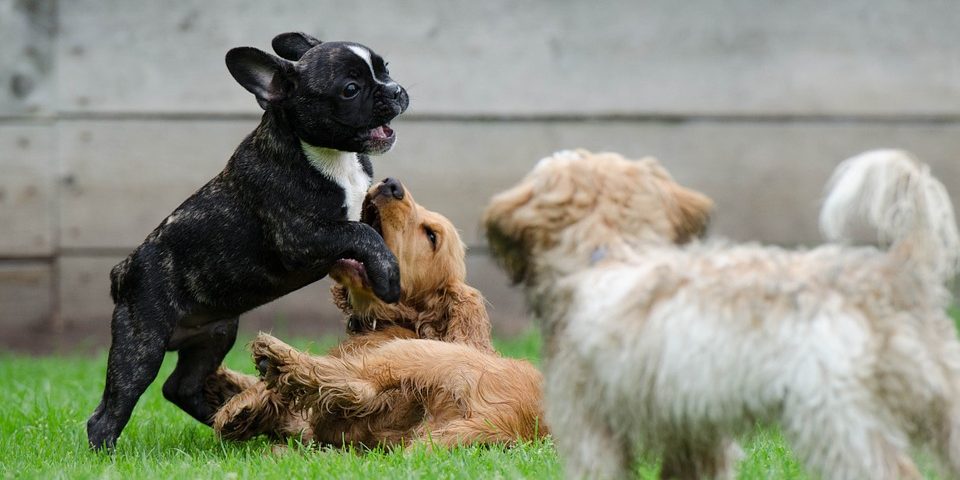
Socialisation is the process whereby a puppy learns to recognise and respond to different stimuli such as other animals, people and the environment.
Why is socialisation important?
The most important time to socialise a puppy is during the first 3 – 4 months of life. During this period sociability outweighs fear and the puppy’s brain is most inclined to accept new experiences.
Proper socialisation will engage all your puppy’s senses through exposure to the sights, sounds and smells of daily life. This exposure will desensitise and condition your puppy so that he develops a comfort level with different and new situations.
Socialisation is intended to develop your puppy into an outgoing, sociable dog without behaviour problems. If you do not socialise your puppy, he may grow up to be fearful, anxious and not able to cope with changes in his environment or situation. This might make him difficult to handle for you, the vet, groomer, pet sitter, kennel staff and any visitors to your home.
Beginning of puppy socialisation…
The socialisation of a puppy starts with his mother who provides him with everything he needs for the first few weeks and provides him with a safe and secure environment. She will also give puppy his first lesson in discipline when his behaviour exceeds limits only she understands.
Puppy will learn additional socialisation skills from his littermates. Through play puppy learns about dominance, submission, how to interact with members of his own species and receives a wide range of stimulation for the development of his senses and physical abilities.
The breeder/owner of the mother can play a big part in the socialisation process by getting puppy used to human contact and the sounds and happenings in the household.
The new owner’s role in puppy’s socialisation
You will only get to take puppy to his new home when he is 6 – 8 weeks old. This means that you should make a real effort to socialise puppy during the early weeks together.
It is your responsibility, as owner, to introduce and familiarise your puppy to as many people, places, objects, noises and other animals as possible.
Tips for socialising your puppy
- Enrol your puppy in a well-run puppy class. This is an excellent way to:
- increase puppy’s responsiveness to commands
- teach proper interaction with people
- learn tips for successful housebreaking
- develop more realistic expectations for your dog

- strengthen your bond with your puppy
- Let your puppy interact with people of varying ages, sizes and ethnicities and of both genders.
- Introduce your puppy to different animals. Invite friends with healthy, gentle dogs or puppies to bring them for a “play-date” with your puppy or take your puppy to them. Also introduce your puppy to cats.
- Make sure that your puppy is exposed to unfamiliar or out-of-place objects around your home so that he will not be startled or be fearful of changes in his environment. e.g. rearranging of furniture, opening an umbrella, etc.
- Help your puppy to become accustomed to a variety of sounds around the house. e.g. vacuum cleaner, blow dryer, lawn mower, plastic/paper bags.
- Get your puppy used to being handled, bathed, brushed, nails clipped, teeth brushing and ears and other body parts examined/inspected. This is also a good time to introduce puppy to his collar, harness and lead.
- Take puppy for short trips in the car to allow him to become accustomed to it.
- Take care not to overwhelm, frighten or harm during this process. It is also important not to hurry or force the process, and do too much at once. Puppies tire quickly. By keeping the sessions short and frequent you will achieve more success.
- Try to keep all encounters as pleasant as possible. Think ahead and try to prevent any unpleasant events from occurring. Try to engineer encounters that will be successful and rewarding.
- Allow your puppy to make an approach in his own time and retreat if he wants to. If your puppy shows any signs of anxiety or being overwhelmed, remove him from the situation or give him more space and freedom to approach.
- It is very important not to reinforce his anxious or fearful behaviour by giving him a lot of attention and affection. Stay close by to reassure him that he is safe.
- It is also important that your puppy learns how to be well behaved. Prevent bad behaviour by ignoring or diverting attention away from it, whilst rewarding and praising good behaviour.
Remember, puppy’s socialisation does not stop when he is 4 months old, it should be continued through the first year.
Vaccination vs. Socialisation
Young puppies acquire some immunity from their mother (if she was vaccinated), which protects them during the early weeks. This is why puppies only receive their first vaccination at 6 – 8 weeks of age. Socilisation under controlled conditions should start before the vaccination course is completed.
We suggest that your puppy should at least have had his first vaccination before attending puppy classes.
Until your puppy is fully protected by vaccination, you should:
- not allow your puppy to mix/socialise with dogs and cats with an unknown vaccination status
- not take puppy to public places where other dogs of unvaccinated status may have been
- carry your puppy if you want to take him out and about with you
If you have any further question, please consult your Veterinarian or a qualified Animal Behaviourist.

Image: Pinterest
