

Some of us have already experienced that feeling of panic when you come home and realise your furry family member has gone missing. No matter how careful you are, there is always a chance that your pet could go astray, even a pet that is kept indoors. Without proper identification it makes it very hard for the person who finds your pet and/or an Animal Welfare Organisation to reunite you with your pet.
It is very important that all pets, even pets kept indoors, wear a collar with an ID tag. Unfortunately, a collar can break or become detached and the engraving or writing on the ID tag can become illegible over time. Therefore it is a very good and responsible idea to have your pet microchipped as well. A microchip is a permanent method of identification.
What is a microchip?
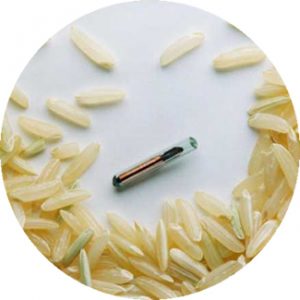
Image: Google Images
A microchip is a non-toxic, integrated circuit (transponder) based on a passive RFID (Radio Frequency Identification) technology. The chip is about the size of a grain of rice and contains a unique code (microchip or identification number) that is registered on the microchip company’s database with your information and contact details and your pet’s information. It is made of an inert material which means it has no power source and won’t be rejected by your pet’s body.
Remember a microchip is not a GPS (Global Positioning System) or a tracking device.
How does a microchip work?
When a handheld scanner/microchip reader is moved over your pet’s body it sends out a magnetic field, which picks up the unique code imprinted on the microchip. The microchip company can then be contacted, the unique code given and your contact details acquired to reunite you with your pet. It is therefore very important to keep your details up to date. All veterinary clinics and most Animal Welfare Organisations are equipped with scanners.
How and where is the microchip inserted?
Pets of all sizes from small birds, exotic pets, fish, dogs and cats and horses can be microchipped.
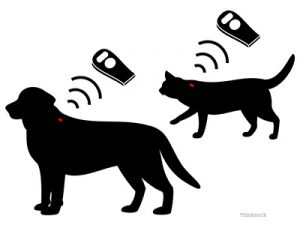
Image: Pet Health Network
The microchip is inserted under the skin (subcutaneously) with a large needle, between or just above the shoulder blades by a veterinarian. No anaesthetic required. The process is similar to a vaccination.
Most pets don’t feel anything, but if they do, it’ll be a minor sting that only lasts a second. Once inserted the microchip remains under the skin and should not migrate.
Because the microchip is beneath the skin you might be able to feel it occasionally, depending on your pet’s size, weight and the thickness of the fur.
What are the costs involved?
The microchip, including the insertion and paperwork, costs between R280 and R400, depending on the clinic you use. Welfare organisations receive microchip donations and are therefore able to offer microchipping at a reduced rate. Certain microchip companies charge a minimal annual admin fee to maintain their client database.
Our clinics use the Virbac Backhome Microchip which does not require any annual admin fees, only the once-off insertion fee.
For an exact cost, please contact your local veterinary clinic.
How is my information registered?
Your veterinary clinic will complete the required forms, send a copy to the microchip company for registration on their database and give you a copy to keep with your pet’s records. Make sure to record the unique code in your pet’s vaccination book as well. Your details will be accessible by logging in on the microchip company’s website with your password, which you will receive as soon as the details are registered by the company. You will then be able to edit your information as needed.
Conclusion
- Microchips are a permanent method of identification.
- Having your pet microchipped is a quick and safe procedure.
- A microchip is a wonderful addition to your pet’s collar and ID tag. Your pet will still be identifiable if the collar and tag is lost.
- All veterinary clinics and most Animal Welfare Organisations are equipped with scanners.
- Microchipping your pet may seem costly, but it is usually a once-off fee and the microchip lasts for life.
If your pet is not microchipped yet, please consider having it done sooner rather than later!
Sources/additional reading:
Virbac Backhome – About Backhome and Features and benefits of the Backhome product range
icatcare.org – Importance of microchipping
PetMD.com – Why microchip your cat?
