

One of the most important health decisions you will make for your pet is to have him/her sterilised (spayed/neutered). Not only does it help with the pet overpopulation problem, but it also has health benefits for your pet.
What is spaying and neutering?
Spaying involves removing the ovaries, fallopian tubes and uterus of a female pet. The procedure is also called a panovariohysterectomy.
Neutering, also called a castration, involves the removal of the testes of a male pet.
The procedure is usually done at 6 months of age, for cats and small breed dogs. The recommended age for sterilisation of medium breed dogs are 6-12 months of age. Large and giant breed dogs mature later, and therefore sterilisation is recommended around 12-24 months of age, depending on their breed. For the best advice on the right age to have your pet sterilised, please consult your veterinarian.
Benefits of having your pet sterilised
- Eliminates the heat cycle and the undesirable behaviour associated with it.
- An intact female dog will experience a heat cycle about every 6 months, lasting for approximately 21 days. During this time she may leave bloodstains, be anxious or short tempered, actively seek a mate and attract unneutered male dogs.
- An unsterilised female cat has a heat cycle every 3 weeks during breeding season, lasting for 5 days. During this time she will frequently vocalise and urinate to attract a mate, or even roam looking for a male.
- Spaying reduces the risk of your female pet developing ovarian, uterine or mammary cancer or a pyometra (a sever, often fatal, uterine infection)
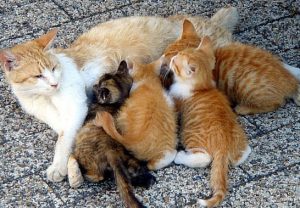
- It eliminates the risk of unwanted litters.
- In male pets neutering eliminates the risk of developing testicular cancer and decreases the risk of developing prostate problems.
- Sterilisation decreases the urge to roam, indirectly reducing the risk of being hit by a vehicle and fighting which can lead to
 serious injury or death.
 - If done early enough, it eliminates the undesirable behaviour displayed by unneutered males (urine marking and misplaced dominance)
- Sterilisation aids in the fight against pet overpopulation. Every year millions of unwanted puppies, kittens and adult animals end up in shelters, suffer on the streets as strays or are euthanised.
Yes, having your pet sterilised costs money, but the cost of caring for a pregnant pet and a litter of puppies or kittens is much more expensive and stressful. A caesarian, if necessary, costs even more.
Sterilising your pet will not change his/her personality or natural instinct to protect its home or family. In fact, sterilisation aids guard dogs in focusing on their guarding duty as the reproductive urge is eliminated.
About the procedure
Spaying and neutering are surgical procedures performed under general aneasthetic. The patient is monitored carefully to diminish the risk complications.
In female animals an incision is made into the abdomen, near the navel, through which the ovaries, fallopian tubes and uterus is removed. In male cats a small incision is made to remove each testes from the scrotum. Male cats do not need sutures as the incision heals rapidly. Male dogs receive an incision just before the scrotum through which the testes are removed. The incision is then sutured and, if not absorbable, the skin sutures are removed 12 to 14 days later. Pain medication is also given before and during the procedure as well as for a few days after surgery to make them as comfortable as possible.
How to prepare your pet for surgery
In general, no food should be given after 9pm the night before the procedure or on the morning of the procedure. Water should always be freely available.
Cats can be kept inside to prevent them from disappearing the morning of the procedure, which most cats love to do.
Your vet or vet nurse will also give you all the necessary pre- and post-operative instructions.
After surgery
 Recovery is usually uneventful. Your pet might experience some discomfort for a short time after the procedure while healing occurs, but pain medication to control the pain is given.
Provide your pet with a quiet, warm place indoors to recover. For the first meal, feed you pet small amounts of food at a time. Keep your pet quiet for a few days, preventing them from running, jumping or playing. Avoid bathing or swimming until the incision has healed and the sutures have been removed.
Prevent your pet from licking or pulling at the sutures. An Elizabethan collar can be used to help prevent this from happening.
If your pet has managed to pull the sutures out or if you notice the surgical site is open, inflamed, swollen, or has a discharge please contact your vet immediately.
Maintenance
Sterilisation does have an effect on your pet’s metabolism, therefor feeding the correct diet in the correct quantities and exercising regularly will help to keep your pet fit and lean. Once sterilised a pet may need up to 25% less calories per day. You can consult our friendly nurse for any advice to help keep you pet slim, trim and active.
All pets, whether sterilised or not, should visit the vet at least once a year for a thorough physical examination. This way your vet can help you monitor your pet’s weight and overall health and advise on any dietary changes or adjustments, if required.
If you have any further questions about pet sterilisation, please consult your veterinarian.
