
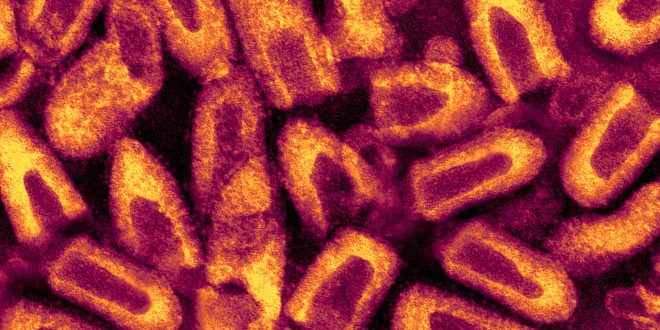
This preventable disease causes the deaths of more than 50 000 humans and millions of animals worldwide every year. Rabies remains an important and untreatable illness even in these modern times.
What is rabies?
Rabies is a viral disease caused by a virus belonging to the family of viruses called Rhabdoviridea. The virus affects the gray matter of the brain and the central nervous system of all mammals, including humans.
Once the virus enters the body, it replicates in the cells of the muscles, subsequently entering the nerve endings. From here it travels to the central nervous system thus rapidly spreading to the brainstem and forebrain.
How is rabies transmitted?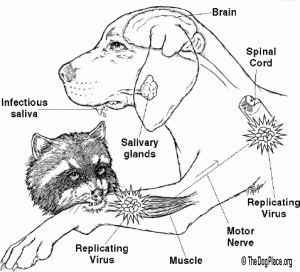
The rabies virus is present in high concentrations in the saliva of an infected animal and is primarily transmitted by a bite wound. It can also be transmitted when infected saliva or blood makes contact with the mucous membranes or an open, fresh wound.
The virus cannot be transmitted through intact skin, so touching, petting or being close to an infected animal is not a risk but there is an obvious threat of sustaining bite wounds from an affected animal showing clinical signs.
What are the symptoms?
Animals will not show signs immediately following exposure to rabid animals. Symptoms can take months to develop, varying from case to case and can be non-specific.
Initially the animal may show a change in personality and behaviour. It may also constantly lick, bite and scratch at the site of the bite wound and a fever may also be present. This is called the prodromal stage. Most animals may then progress to the f urious form, the “dumb” or paralytic form or a combination of both.
In the furious form the animal can exhibit extreme behavioural changes, e.g. irritability, light phobia, fear of water, aggression, snapping and biting. The animal may also experience seizures. In the paralytic form the animal shows signs of weakness, loss of coordination, disorientation and staggering caused by paralysis of the hind legs. Paralysis of the jaw may follow, resulting in an inability to swallow, resulting in drooling and the well-known “foaming at the mouth”. Other classic signs include loss of appetite, change in tone of voice and death.
Unfortunately, once clinical signs have developed, death is inevitable.
How is rabies diagnosed?
Rabies is diagnosed using a test which looks for the presence of the virus in the brain tissue. The test can unfortunately only be performed after the death of the animal.
There is unfortunately no accurate test to diagnose rabies is live animals.
How is rabies treated?
There is NO cure or treatment for rabies once symptoms appear. If you suspect that your pet may have rabies or was bitten by an infected animal, please consult your veterinarian urgently.
How can rabies be prevented?
Rabies is 100% preventable with vaccination.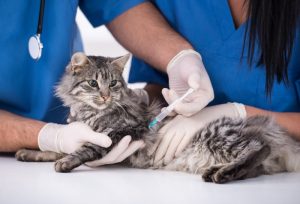
The first rabies vaccination is given at 12 weeks of age, followed by a booster vaccination within ±9 months. Thereafter, animals who live in non-Rabies endemic areas should be vaccinated at least every 3 years, and animals living in Rabies endemic areas should be vaccinated annually against rabies.
Having your pet vaccinated against Rabies is compulsory by law in South Africa!
*This article was reviewed and approved by a veterinarian.
Updated 19/07/2024
